

Proof Behind the Process
Del offers a tried-and-true system for property management in Etobicoke.

721
+
Suites Managed
Experience across investment units throughout the GTA

42
Communities
Broad exposure to different buildings, boards, and operating styles

99.5
%
Rent Collection Rate
A strong benchmark across Del’s portfolio

$
2400
Average Rent
Optimized rental value across managed properties
Etobicoke Insights for Condo Owners
Did you Know?
Etobicoke owners are still subject to Toronto-wide filing and short-term rental rules because Etobicoke falls within the City of Toronto.

Local Amenities
.svg)

Pricing Your Etobicoke Condo

Maintenance & Condo Board Tips

Tax Optimization

Compliance & LTB Support

Performance Boost Strategies
Explore Buildings in
Etobicoke
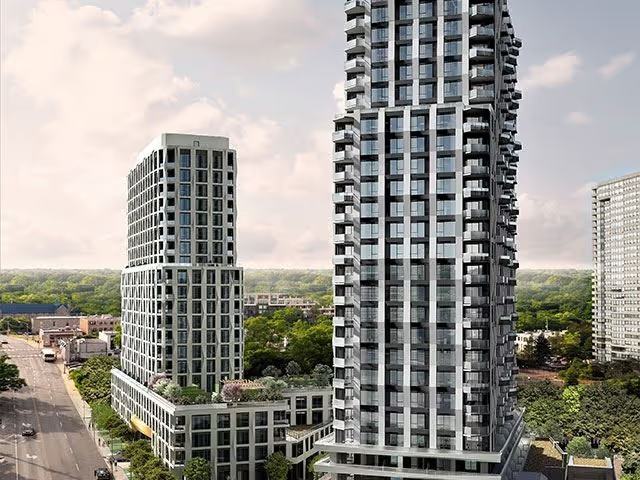
Westerly 1
25 Cordova Avenue, Toronto ON M9A 0E5
Cordova Ave & The Queensway

Westerly 2
60 Central Park Roadway, Toronto ON M9A 0E6
Central Park Rdwy & The Queensway

South Beach Condos and Lofts II
90 Park Lawn Road, Etobicoke ON M8Y 0B6
Park Lawn Rd & Lakeshore Blvd W

Beyond The Sea- North Tower
15 Legion Road, Etobicoke ON M8V 0A9
Legion Rd & Lakeshore Blvd W
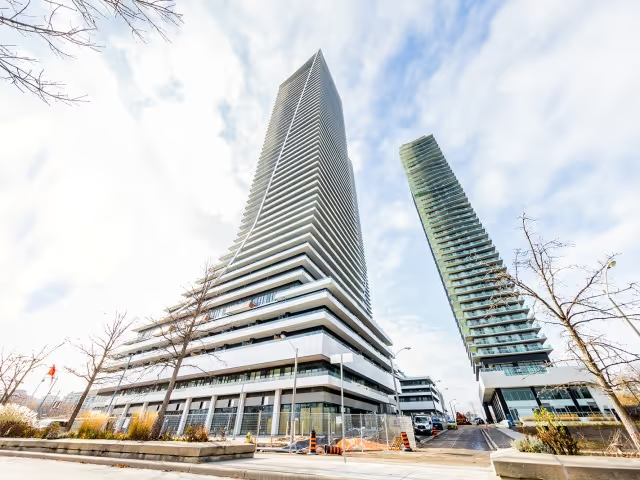
Water Tower at Eau Du Soleil
20 Shore Breeze Drive, Etobicoke ON M8V 0C7
Shore Breeze Dr & Lakeshore Blvd W / Park Lawn Rd

Vita-II On The Lake
65 Annie Craig Drive, Etobicoke ON M8V 0G3
Annie Craig Dr & Lakeshore Blvd W
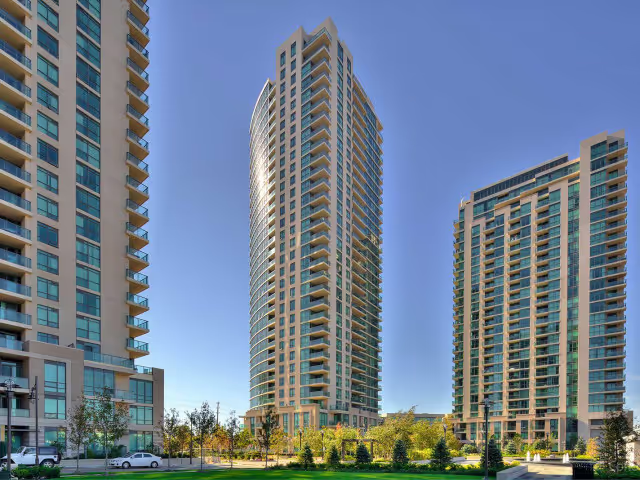
One Sherway 2
225 Sherway Gardens Road, Etobicoke ON M9C 0A3
Sherway Gardens Rd & Hwy 427 / Queensway
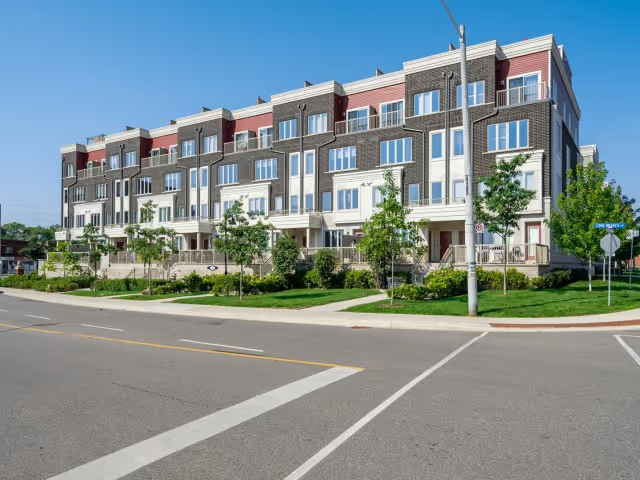
Minto Longbranch
3580 Lake Shore Blvd West, Etobicoke ON M8W 0C2
Lake Shore Blvd W & Browns Line / Kipling Ave
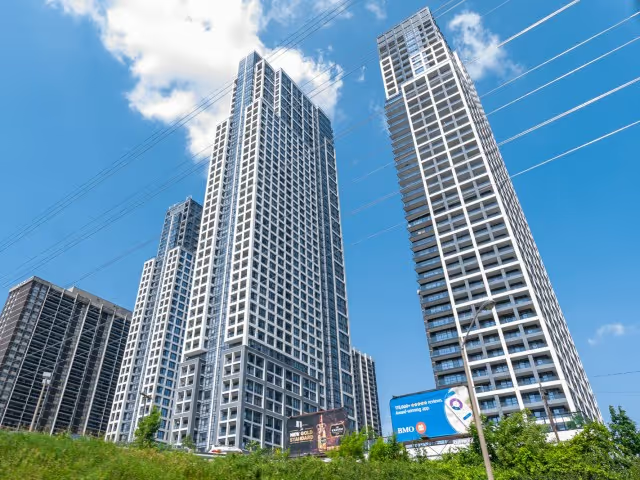
Islington Terrace
7 Mabelle Avenue, Etobicoke ON M9A 0C9
Mabelle Ave & Dundas St W / Islington Ave
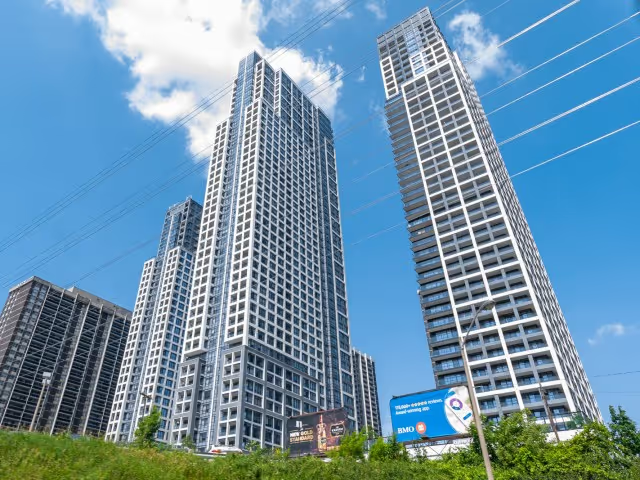
Bloorvista at Islington Terrace
9 Mabelle Avenue, Etobicoke ON M9A 0E1
Mabelle Ave & Dundas St W / Islington Ave

West Village II - 2 Eva
2 Eva Road, Etobicoke ON M9C 0A9
Eva Rd & Dundas St W / Hwy 427

West Village I - 6 Eva
6 Eva Road, Etobicoke ON M9C 0B1
Eva Rd & Dundas St W / Hwy 427
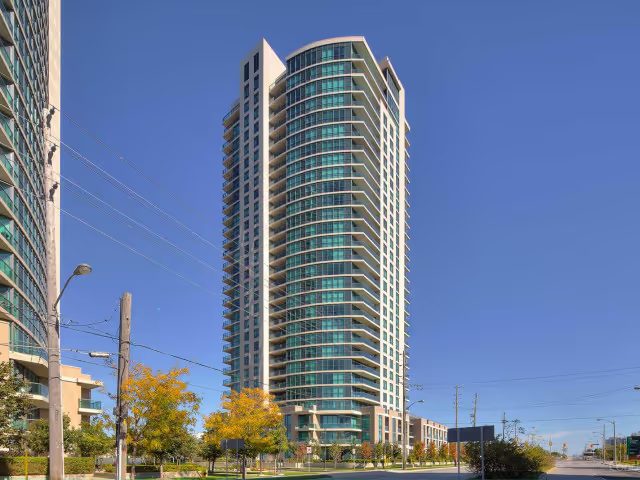
One Sherway 3 - 215 Sherway
215 Sherway Gardens Road, Etobicoke ON M9C 0A4
Sherway Gardens Rd & Hwy 427 / Queensway
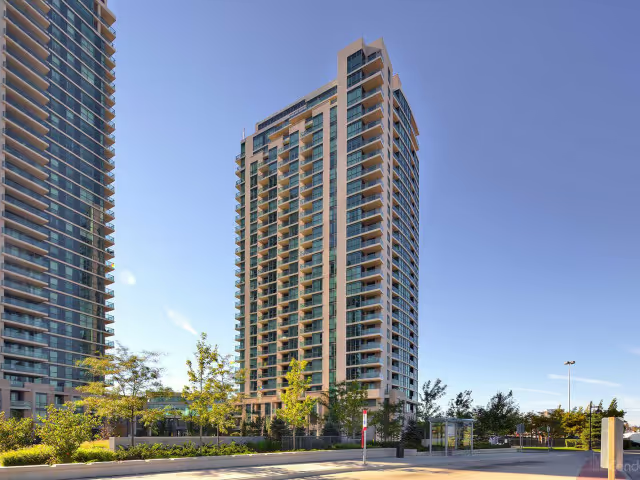
One Sherway 1 - 235 Sherway
235 Sherway Gardens Road, Etobicoke ON M9C 0A2
Sherway Gardens Rd & Hwy 427 / Queensway
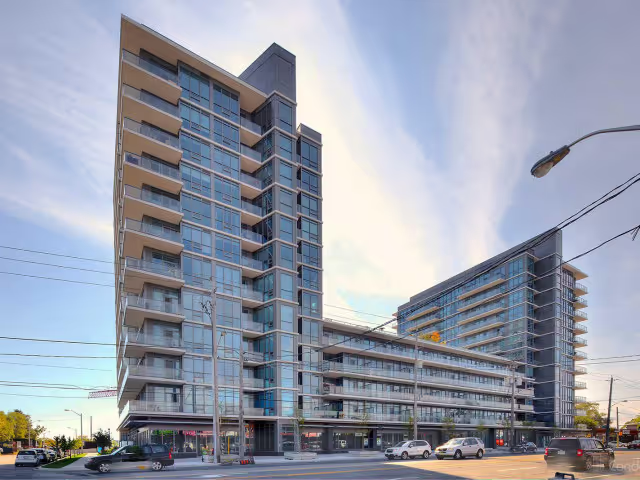
IQ Condos
1185 The Queensway, Etobicoke ON M8Z 0C6
The Queensway & Islington Ave
Hands-On Support for Etobicoke Rentals
Owning a rental in Etobicoke means dealing with a wide mix of building types, neighbourhoods, and tenant profiles. Del brings structure to Etobicoke condo rental management so owners are not left piecing together leasing, compliance, and day-to-day issues on their own.

Dedicated Specialist
You have one go-to contact who understands your unit, your building, and what is happening with your rental.

LTB Timeline Expertise
Notices, documentation, and next steps are handled with close attention to timing and process.

Condo Knowledge
Real familiarity with condo board rules, move procedures, contractor access, and the details that can slow things down.

Always Reachable
Questions, updates, and issues are handled clearly so owners are not left waiting for answers.
Why GTA Owners Work With Del
Real owners. Real Results.

I had an amazing experience with the lease transfer process thanks to Aira and Chirag. They made what could have been a complicated situation feel completely seamless. A huge shoutout to Aira, who was extremely helpful and took the time to explain every detail so clearly. Her patience and expertise made all the difference. Highly recommend their services!

Finding a tenant is a task that many property owners do not wish to tackle. It has become tedious and warrants caution. Using Del Condominium Rentals has eliminated the stress incurred from this process. They have always been successful in attaining occupancy for our units and do so in a professional manner. With their due diligence, we have never had to be preoccupied with poor tenant selection. The transitions between all listings have been handled with ease. They are very knowledgeable and have a great understanding of the markets to make accurate and informed decisions when it comes to new listings and rentals. I am so happy in making the right decision to use Del Condominium Rentals for our rental needs. We will continue to use Del Condominium Rentals, the service they provide is wonderful. I would like to take this time to thank the whole team for all their efforts and dedication and for creating a very friendly and professional environment with their clients.
I've been renting my condo through Del Condominium Rentals since 2020, and the experience has been outstanding every step of the way. As part of the trusted Tridel Group of Companies, Del brings a level of professionalism and reliability that truly sets them apart in the GTA rental market. From seamless tenant placement to responsive property management, their team handles everything with care and efficiency — giving me complete peace of mind as an owner. If you're looking for a property management company you can genuinely trust, I highly recommend Del Condominium Rentals.
Good communications and timely actions by the representatives. Good accounting and payments on schedule. Least input required from the property owner
I already recommended a friend
Always informed. Great guidance and management of properties.
The overall professionalism and communication is fantastic.
Very Very helpful and knowledgeable and reliable
"Taiye is an outstanding agent—responsive, professional, and proactive. He provides valuable market insights for rental adjustments and negotiates with tenants tactfully and effectively. He also efficiently coordinates inspections, repairs, and client requests, ensuring smooth operations. His dedication, communication, and attention to detail make him a true asset. Highly recommended!"
Very grateful for your represenative Tanmai who helped me communicate with my landlord so effectively! It is great that there is a trust-worthy third party management service. It makes my life so much easier!
All services were highly professional and sincere, making them trustworthy.
Quick problem resolution and happy with management team. Recommended definitely.
Thanks Taiye Murtala for your outstanding service. Your prompt responses, clear communication and helpful attitude truly appreciated. Wishing you all the best!
They’ve tried all possible options to help us as fast as possible It the best example of management for a building
All my experiences with Del Condominiums have been easy and stress free. Everyone I have dealt with has been a pleasure.
Taiye Murtala, I would like to extend a special thanks to you for your outstanding support and professionalism. You were highly responsive, cooperative, and consistently willing to go the extra mile to resolve the issue quickly. Your dedication, clear communication, and problem-solving skills made the entire experience smooth and stress-free. I truly appreciate your commitment to excellent service—keep up the great work!
I had a wonderful experience with the Business Department Executive at Del condominium Rentals office. She is professional, knowledgeable, and genuinely kind. She took the time to listen, explained everything clearly, and answered all my questions with patience. She made the whole process feel easy and comfortable, and you can truly feel that she cares about both the people and the business! A true professional and a pleasure to work with.
Aira Marquez from Del Condominium has been very supportive and understanding. She acts promptly and keeps the communication clear. I had a good experience coordinating with the team from Del Condominum.
"I’m moving out and wanted to take a moment to share my experience with DEL Rentals. Throughout my time here, the building management team has been consistently helpful, professional, and timely. Any issue I raised was acknowledged quickly and usually resolved within 24 to 48 hours, or at the very least, action was taken right away. That level of responsiveness really stood out to me. What I appreciated most was their professionalism and patience. Even during moments when I may have been frustrated or not at my best, they remained kind, respectful, and humble. It’s not easy to maintain that level of composure, and I truly noticed it. Overall, my experience with DEL Rentals has been very positive, and I’m genuinely grateful for the support and service they provided during my stay.Thank you to Taiye Murtala and Aira Marquez for helping me through my stay and always being available to step in and help and keep up my flat and fixing anything that needed attention. Thank you for your kindness and your professionalism at all times . I hope to return to del rentals in future again- Shikha Shetty"
"I’ve had a great experience with Taiye Murtala from Del Condominium Rentals during my stay at the property. He has been extremely helpful whenever I had questions or needed assistance. Taiye was always responsive, professional, and made sure any concerns I had were addressed promptly. His support and clear communication made a big difference, and it was very reassuring to know that any issues would be handled efficiently. I truly appreciate his dedication to providing excellent service. Thank you, Taiye, for your help and for making the experience much smoother."
"We have been living in a Del Rentals apartment for the past 4 years, and our experience has been very positive. The building maintenance has always been well managed, and any issues are handled promptly. All the lease-related formalities, including our lease extension, were completed smoothly and on time, which made the process very convenient for us. A special thanks to Chrisna Thorng for helping us with the lease-related formalities and making the process easy and stress-free. Overall, we’re very happy with the service and support provided during our stay."
Stay Connected to Your Etobicoke Rental
Log into your owner portal for statements, updates, and key documents, or connect with a local agent if you need help with your Etobicoke rental.

Frequently Asked Questions
What does Etobicoke property management with Del cover?
It covers leasing, tenant screening, rent collection, maintenance coordination, reporting, and support with compliance-related issues. The goal is to give owners a single team to handle the operational side of the rental.
Can I use my Etobicoke condo as a short-term rental?
Because Etobicoke is part of Toronto, the city's short-term rental rules still apply. Condo corporation rules may add further restrictions depending on the building.
What should Etobicoke owners budget for besides condo fees?
Owners should plan for property taxes, routine maintenance, turnover expenses, and any building-specific charges that can come up between tenants or during repairs.
Why does local knowledge make such a difference in Etobicoke?
Because building operations can vary a lot from one property to the next. Things like move procedures, contractor access, parking rules, and board expectations can all affect how smoothly a rental runs.
Built for Owners Who Want to Stay Informed.
Get practical insight on pricing, compliance, and the day-to-day realities tied to owning a rental condo.
Property Taxes & MPAC Assessments for New Condos
Property taxes for new condos in Ontario can be a bit convoluted, as the taxes are assessed by MPAC, while municipalities handle the billing side, and those two timelines do not always line up neatly for a newly built condo
Read More
Condo Insurance: Why Deductibles Matter to Unit Owners
The corporation’s insurance generally covers the building, common elements, and standard units, while the owner’s policy is usually there for contents, improvements, personal liability, and certain chargebacks or deductible-related exposures.
Read More
Lease Agreements & Renewals in Ontario: A Guide for Rental Property Owners
If you own a rental property in Ontario, lease agreements and renewals can influence rent, vacancy risk, tenant stability, and the amount of follow-up you, as the owner, need to manage.
Read More
Our Industry Partners