

The Numbers Behind the Work
Condo rental management backed by established systems, responsive communication, and steady execution.

43
Suites Managed
Experience across investment units throughout the GTA

27
Communities
Broad exposure to different buildings, boards, and operating styles

99.5
%
Rent Collection Rate
A strong benchmark across Del’s portfolio

$
2600
Average Rent
Optimized rental value across managed properties
Managing a Condo in Vaughan
Did you Know?
Vaughan requires short-term rental operators to be licensed, and the city says short-term rentals are only permitted in a principal residence. Owners and brokerages also need a Municipal Accommodation Tax number.

Local Amenities
.svg)

Pricing Your Vaughan Condo

Maintenance & Condo Board Tips

Tax Optimization

Compliance & LTB Support

Performance Boost Strategies
Explore Buildings in
Vaughan

Transit City 5 - TC5
7890 Jane Street, Vaughan ON L4K 0K9
Jane St & Hwy 7
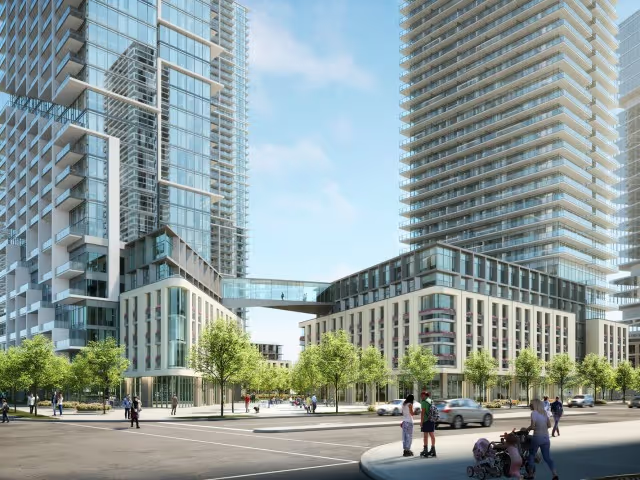
Transit City 4 - TC4
1000 Portage Parkway, Vaughan ON L4K 0L1
Portage Pkwy & Hwy 7

YongeParc 2 Condos
85 Oneida Crescent, Richmond Hill ON L4B 0H4
Oneida Cres & Yonge St / Hwy 7
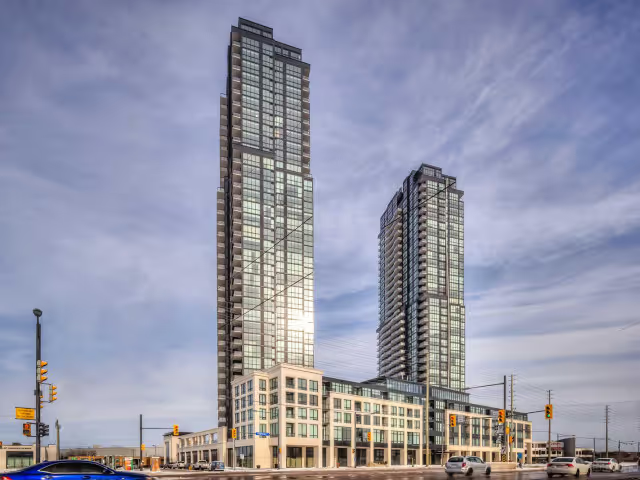
Expo II
2910 Highway 7, Vaughan ON L4K 0H8
Hwy 7 & Jane St

Nord East
2908 Highway 7, Vaughan ON L4K 0K5
Hwy 7 & Jane St
Nord West
2916 Hwy 7, Concord ON L4K 0K6
Hwy 7 & Jane St

The Met Condos-Vaughan
7895 Jane Street, Vaughan ON L4K0K2
Jane St & Hwy 7
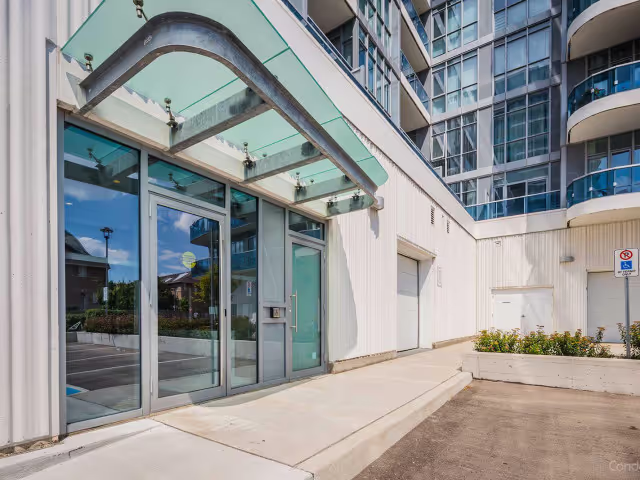
Xpression - South Tower
9471 Yonge Street, Richmond Hill ON L4C 0Z5
Yonge St & Major Mackenzie Dr
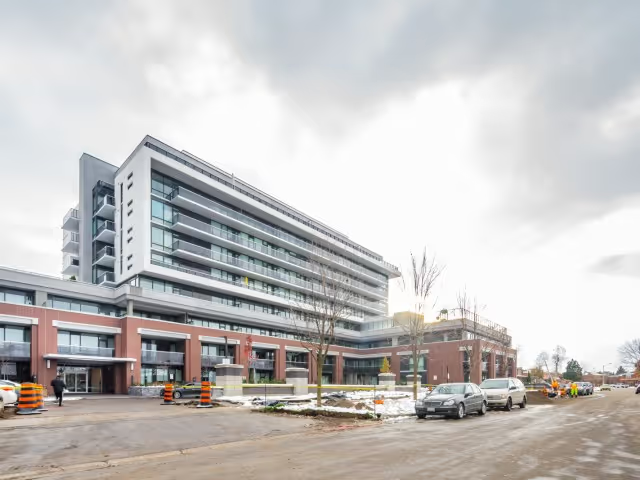
Avenue on 7
4800 Highway 7, Vaughan ON L4L1H8
Hwy 7 & Pine Valley Dr / Weston Rd
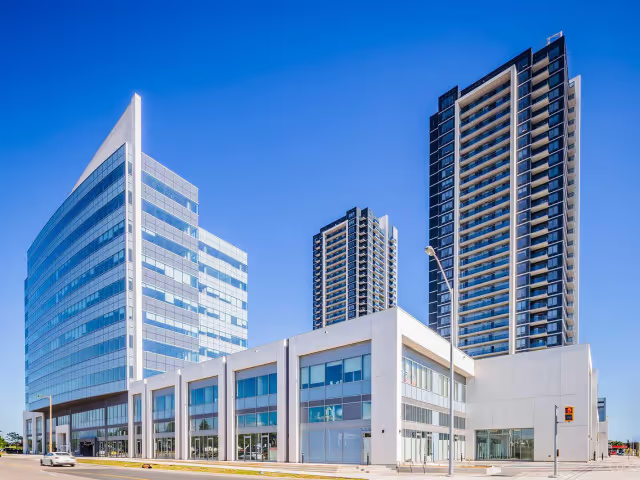
Centro Square Condo Tower A
3600 Highway 7, Vaughan ON L4L 0G7
Hwy 7 & Weston Rd / Pine Valley Dr
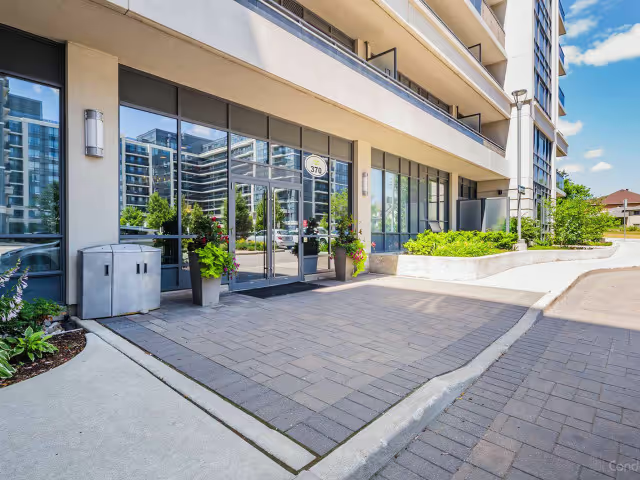
Royal Garden
370 Highway 7 East, Richmond Hill ON L4B 0C4
Hwy 7 & Leslie St
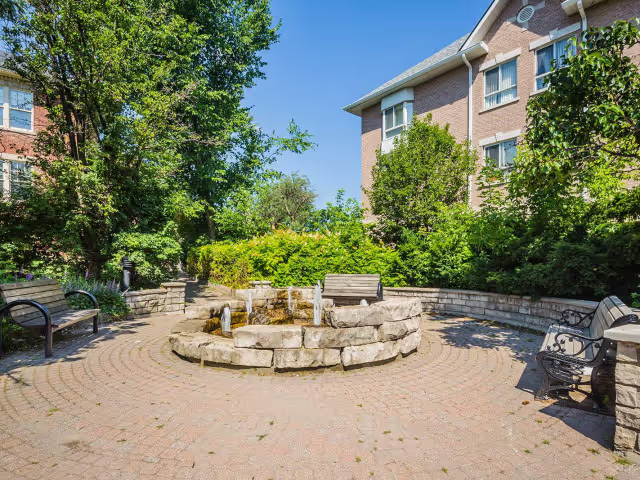
Renaissance
10101 Yonge St, Richmond Hill ON L4C 0V6
Yonge St & Major Mackenzie Dr / 16th Ave
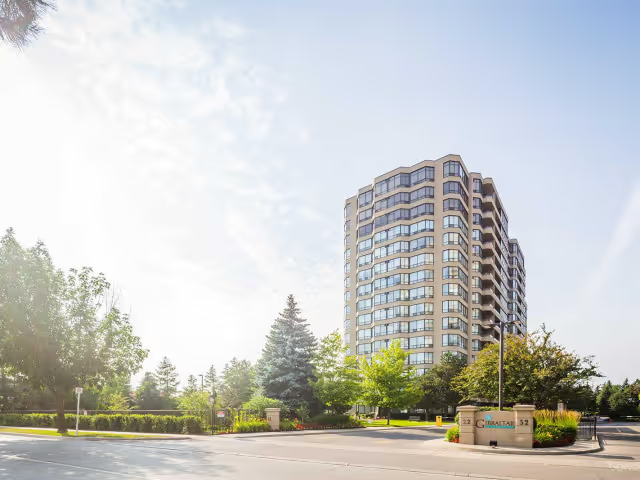
Gibraltar Condos
22 Clarissa Drive, Richmond Hill ON L4C 9R6
Clarissa Dr & Yonge St / Major Mackenzie
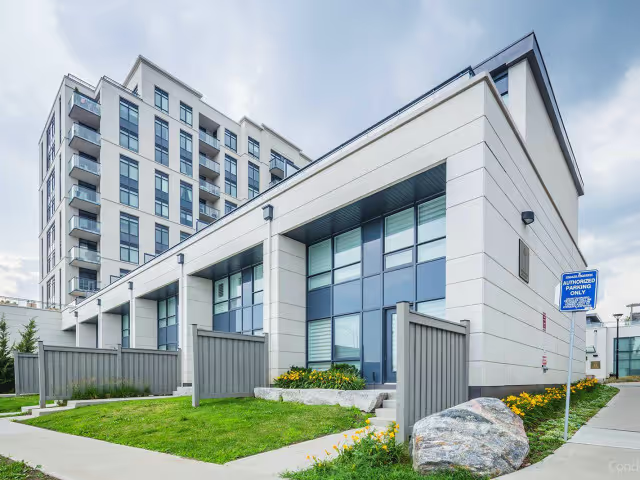
Allegra - Phase II
12 Woodstream Blvd, Vaughan ON L4L 8C3
Woodstream Blvd & Hwy 27 / Major Mackenzie
Hands-On Support in Vaughan
Vaughan is a rapidly evolving part of Ontario, which can make managing a condo difficult. That’s why, between newer high-density development around VMC (Vaughan Metropolitan Centre) and commuter-driven demand, property management Vaughan owners rely on already understand how the changing local conditions affect the rental.

Personal Specialist
One direct contact who knows your unit, your building, and what needs attention.

LTB Timeline Expertise
Notices, documentation, and next steps are handled with careful attention to timing.

Condo Knowledge
Familiarity with building procedures, access rules, and the operational details that can interrupt the flow of a tenancy.

Always Reachable
Clear updates and responsive communication when something needs to move.
Trusted by GTA Condo Owners
Real owners. Real Results.

I had an amazing experience with the lease transfer process thanks to Aira and Chirag. They made what could have been a complicated situation feel completely seamless. A huge shoutout to Aira, who was extremely helpful and took the time to explain every detail so clearly. Her patience and expertise made all the difference. Highly recommend their services!

Finding a tenant is a task that many property owners do not wish to tackle. It has become tedious and warrants caution. Using Del Condominium Rentals has eliminated the stress incurred from this process. They have always been successful in attaining occupancy for our units and do so in a professional manner. With their due diligence, we have never had to be preoccupied with poor tenant selection. The transitions between all listings have been handled with ease. They are very knowledgeable and have a great understanding of the markets to make accurate and informed decisions when it comes to new listings and rentals. I am so happy in making the right decision to use Del Condominium Rentals for our rental needs. We will continue to use Del Condominium Rentals, the service they provide is wonderful. I would like to take this time to thank the whole team for all their efforts and dedication and for creating a very friendly and professional environment with their clients.
I've been renting my condo through Del Condominium Rentals since 2020, and the experience has been outstanding every step of the way. As part of the trusted Tridel Group of Companies, Del brings a level of professionalism and reliability that truly sets them apart in the GTA rental market. From seamless tenant placement to responsive property management, their team handles everything with care and efficiency — giving me complete peace of mind as an owner. If you're looking for a property management company you can genuinely trust, I highly recommend Del Condominium Rentals.
Good communications and timely actions by the representatives. Good accounting and payments on schedule. Least input required from the property owner
I already recommended a friend
Always informed. Great guidance and management of properties.
The overall professionalism and communication is fantastic.
Very Very helpful and knowledgeable and reliable
"Taiye is an outstanding agent—responsive, professional, and proactive. He provides valuable market insights for rental adjustments and negotiates with tenants tactfully and effectively. He also efficiently coordinates inspections, repairs, and client requests, ensuring smooth operations. His dedication, communication, and attention to detail make him a true asset. Highly recommended!"
Very grateful for your represenative Tanmai who helped me communicate with my landlord so effectively! It is great that there is a trust-worthy third party management service. It makes my life so much easier!
All services were highly professional and sincere, making them trustworthy.
Quick problem resolution and happy with management team. Recommended definitely.
Thanks Taiye Murtala for your outstanding service. Your prompt responses, clear communication and helpful attitude truly appreciated. Wishing you all the best!
They’ve tried all possible options to help us as fast as possible It the best example of management for a building
All my experiences with Del Condominiums have been easy and stress free. Everyone I have dealt with has been a pleasure.
Taiye Murtala, I would like to extend a special thanks to you for your outstanding support and professionalism. You were highly responsive, cooperative, and consistently willing to go the extra mile to resolve the issue quickly. Your dedication, clear communication, and problem-solving skills made the entire experience smooth and stress-free. I truly appreciate your commitment to excellent service—keep up the great work!
I had a wonderful experience with the Business Department Executive at Del condominium Rentals office. She is professional, knowledgeable, and genuinely kind. She took the time to listen, explained everything clearly, and answered all my questions with patience. She made the whole process feel easy and comfortable, and you can truly feel that she cares about both the people and the business! A true professional and a pleasure to work with.
Aira Marquez from Del Condominium has been very supportive and understanding. She acts promptly and keeps the communication clear. I had a good experience coordinating with the team from Del Condominum.
"I’m moving out and wanted to take a moment to share my experience with DEL Rentals. Throughout my time here, the building management team has been consistently helpful, professional, and timely. Any issue I raised was acknowledged quickly and usually resolved within 24 to 48 hours, or at the very least, action was taken right away. That level of responsiveness really stood out to me. What I appreciated most was their professionalism and patience. Even during moments when I may have been frustrated or not at my best, they remained kind, respectful, and humble. It’s not easy to maintain that level of composure, and I truly noticed it. Overall, my experience with DEL Rentals has been very positive, and I’m genuinely grateful for the support and service they provided during my stay.Thank you to Taiye Murtala and Aira Marquez for helping me through my stay and always being available to step in and help and keep up my flat and fixing anything that needed attention. Thank you for your kindness and your professionalism at all times . I hope to return to del rentals in future again- Shikha Shetty"
"I’ve had a great experience with Taiye Murtala from Del Condominium Rentals during my stay at the property. He has been extremely helpful whenever I had questions or needed assistance. Taiye was always responsive, professional, and made sure any concerns I had were addressed promptly. His support and clear communication made a big difference, and it was very reassuring to know that any issues would be handled efficiently. I truly appreciate his dedication to providing excellent service. Thank you, Taiye, for your help and for making the experience much smoother."
"We have been living in a Del Rentals apartment for the past 4 years, and our experience has been very positive. The building maintenance has always been well managed, and any issues are handled promptly. All the lease-related formalities, including our lease extension, were completed smoothly and on time, which made the process very convenient for us. A special thanks to Chrisna Thorng for helping us with the lease-related formalities and making the process easy and stress-free. Overall, we’re very happy with the service and support provided during our stay."
Your Vaughan Rental, All in One Place
Log into your owner portal for statements, updates, and key documents, or connect with a local agent if you need help with your Vaughan rental.

Frequently Asked Questions
What does Vaughan condo property management with Del include?
Del handles the moving pieces that keep the rental running properly, including marketing the unit, placing tenants, coordinating repairs, collecting rent, and keeping owners informed. The goal is to reduce the owner’s workload without cutting them out of the loop.
Can I use my Vaughan condo as a short-term rental?
Only if you meet the city’s licensing rules. Vaughan says short-term rentals are only permitted in a principal residence, and owners need the required licence and MAT registration before operating.
Why does local knowledge make such a difference in Vaughan?
Because Vaughan is still developing in ways that affect leasing strategy from one area to another. Transit access, building age, surrounding retail, and the pace of new development can all change how a unit should be positioned and managed.
What should Vaughan owners budget for besides condo fees?
Owners should plan for property taxes, routine maintenance, turnover work, repair coordination, and any building-specific expenses that can show up between tenancies or during access-related work.
Built for Owners Who Want to Stay Informed.
Get practical guidance on pricing, compliance, and the day-to-day realities tied to owning a rental condo.
Tenant Screening & Selection
Tenant screening is one of the few parts of leasing where Ontario landlords can reduce risk before the lease is signed. Once the tenant is in place, most of the important calls have already been made.
Read More
Understanding the Residential Tenancies Act (RTA)
If you rent out a condo in Ontario, the Residential Tenancies Act, 2006 (RTA) is one of the main laws that governs your relationship with your tenant. It sets the rules around leases, rent, repairs, entry, notices, and dispute resolution.
Read More
Short-Term Rentals in Condos
If you are thinking about using a condo as a short-term rental, the first thing to know is that there are two separate layers of rules to be aware of:
Read More
Our Industry Partners